Peru travel itinerary
This Peru travel itinerary covers mainly the northern half of the country. You’ll read more about the impressive mountain roads and hidden villages of the Andes, the Amazon rainforest, and how to get to Iquitos. But also about the more common travel route, from north to south, including places like Chachapoyas, Huaraz, Lima, Ica, and Nazca. The country is absolutely breathtaking and offers so much more than just Machu Picchu. Although I wish I had time to visit Cusco as well, at least I have a good reason to come back. If you’re looking for a different way to see Peru, this is the itinerary for you.
I spent two and a half months in Peru, and of course it’s great if you have the time; it doesn’t mean you can’t explore Peru in a shorter time. I think the ideal time would be about a month, but if you don’t mind flying from place to place, you can see a lot in two or three weeks as well.
Peru at a glance
Photo gallery. Picking only 6 photos to give an impression of the country was the real challenge.


Travel route Peru
If you want to follow this exact route, including the motorbike trip in the Andes and a boat trip on the Amazon River, you’ll need at least a month and a half. If you don’t mind taking national flights and choosing your destinations more carefully, you can see a lot in just 2 to 3 weeks.
Travel locations at a glance:
Chachapoyas → 2/3 days
The Andes on a motorbike → 5/10 days
Huaraz including a 4-day hike in Cordillera Blanca → 3/6 days
The Amazon Rainforest with a boat trip to and from Iquitos → 3/10 days
Tuquillo → 1/2 days
Lima → 2/3 days
Paracas → 1/2 days
Ica & Huacachina 2/3 days
Nazca → 1/2 days
Chachapoyas
A lovely city in the north of Peru, where the city center is free of motor taxis! It instantly feels calmer and makes it such a relaxing city to explore on foot. The city itself has great coffee shops and restaurants. A personal favorite of mine is ‘Cafe Fusiones’. And I’d also like to take a moment to recommend ‘Chachapoyas Backpackers Hotel Boutique’; the location is great, the rooms and rooftop are very nice, but especially the people were great. They kept my backpack safely stored away for seven weeks while I hopped on the back of a motorbike to explore the country. I can't recommend them enough!
There’re many day trips you can do from the city to explore the waterfalls like ‘Catarata Gocta’. I went to Cañon de Huancas and walked along the rim with amazing viewpoints like ‘Mirador La Goya’ and ‘Mirador de Huanca Urco’. It’s an easy walk and close to the city, so a must-see when in Chachapoyas.


The Andes - from Cajamarca to Caraz
If you don’t have a motorbike, or can’t find someone who has space on the back of theirs, it might be worth considering renting a car. This stretch from Cajamarca to Caraz on the edge of the Andes was just stunning. You do need some steel nerves to navigate these gravel, sometimes small, mountain roads, but if and when you do, it’s absolutely worth it.
From our starting point in Chachapoyas to our destination in Huaraz, these are mountain villages I would recommend stopping at:
Leymebamba: There's a cool museum called ‘Leymebamba Museum’ which is worth visiting.
Celendìn: When we were here, on July 15th, they were preparing for a festival: ‘Feast of the Virgen del Carmen in Celendín’
Encañada: A really cute town, with a nice indoor and outdoor market, and a very modern new church, which they were still building when we were here.
Cabeza de Túpac Amaru: not a city, but a cool stopping point and an important statue in Peruvian history. You can’t get close to it with a vehicle; we learned that the hard way, so prepare for a longer hike if you want to see it up close. Read more here about my experience through diary entries.
Lake Sausacocha: A great place for a break during the trip and enjoy the serene lake views.
Huamachuco: The Mercado Central is definitely worth a stop.
Santiago de Chuco: A relatively bigger town so it’s a good place to stay overnight
Pallasca: A very small mountain town, which ended up being my favorite stop. The electricity was not working, and being situated at an altitude of approximately 3,150 meters, the view of the milky way was unlike anything I have ever seen. They gave us candles to bring to our rooms, and the little pizzeria next door, glowing in candle light, was out of a movie so romantic.
Baños termales - Aquilina: Not really a town, but a nice stop to stay overnight, after the insanely beautiful roads between Tauca and Corongo.
Caraz: The sort of smaller version of Huaraz and a great location to visit Laguna Paron from. Bight clear blue water and snow capped mountains; straight out of a postcard. You can walk alongside the water and even go in, if you dare to touch the ice cold water.

Huaraz
If you love hiking and mountain views, this is the city for you. Aside from Machu Picchu, you’ll find some of the most iconic hikes in South America here in Huaraz. You can do day trips to Laguna 69 or Laguna Paron, or do a 4-day Santa Cruz trek or the longer and more challenging 9-day Huayhuash trek.
I did the newer 4x4 trek, which is a 4-day hike in the Cordillera Blanca, taking you over 2 mountain tops and past 4 gorgeous mountain lakes. Every day felt completely different, with more amazing views around each corner, icy blue lagunas and gorgeous sunsets. And we didn’t see any other people the entire 4 days. It was very well organized: a few guides walked ahead of us with mules to set up camp and cook dinner. Other guides walked with us and provided lunch along the way. They arranged our sleeping bags, got us clean water to wash with at the end of each day, and gave us coca tea to help with the altitude sickness.
A bit from my diary:
‘‘When I wasn’t feeling well last week, Mike and I joked about me needing to shit my pants in the mountains. And it nearly happened today - it wasn’t as funny anymore. Although I did have the most insane view on my natural toilet, I would have preferred to feel better.’’
I definitely recommend doing this hike, or any other multi-day hikes in the area. But one tip: make sure you acclimatize in Huaraz long enough. We went up to 5080 meters, and I had altitude sickness the entire trek. So learn from my mistakes, and enjoy the hike!
Cordillera Blanca
The Amazon Rainforest, including Iquitos
Coming from Huaraz, you’ll cross the Andes, drive past Glacier Pastoruri, and stop at Castillo de Chupán to arrive in Tingo Maria: a jungle city and the gateway to the Amazon. The beauty of the city came as a surprise to me, and in hindsight I wish we stayed longer. You can hike in the lush mountains, swim in the lakes, stare at waterfalls, and go cave exploring. An absolute beauty!
From here it’s easy to get to Pucallpa, where you can find a boat to bring you to Iquitos. You’ll most likely need a hammock, a bowl and cutlery, a French press, and fresh fruit. I’ll tell you all about it in a different blog. Our boat trip took us 10 whole days. If you’re here during high tide and don’t choose a heavy cargo boat, you’ll probably make it to Iquitos faster. Read more about my time on the boat here.
Iquitos itself is actually a pretty nice city, with good restaurants and coffee shops, like ‘Ribera café’. If you don’t come here by boat and fly here, you might want to take one of the many tours to explore the Amazon Rainforest. We didn’t because we thought a total of two weeks on a boat was enough, and we wanted to feel the ground under our feet.
To leave Iquitos, we took another boat, this time to Yurimaguas. It only took us three days to get here, and you can arrange your passage by asking captains at the port. I didn’t see much of Yurimaguas itself, because we went straight to Tarapoto. A city in the ‘high jungle’ acting as a border between the Amazon Rainforest and the Andes. Just like Tingo Maria in the south, it’s a beautiful city where you can explore the lush, green surroundings.


Tuquillo
Tuquillo is a very small beach town, a little north of Huarmey. To be honest, I’m not sure how I found it, but I’m glad I did. I stayed at Tuquillo beach & bungalows for four nights, with a perfect view of the ocean. There’s really nothing to do but walk along the shore, visit ‘Playa La Cocinita’, eat ceviche, and do lots of reading. It’s a great place to recharge, especially after more intense travel through the Andes and the Amazon. You can easily get here by bus. I took an overnight bus, about 20 hours, from Chachapoyas to Huarmey, but if you’re coming from Lima, it’s about 6 hours. Then from Huarmey, hop into a motor taxi to Tuquillo.


Lima
The capital of Peru: Lima. We stayed in Miraflores, one of the nicer and more touristy areas of the city, directly across from a cat park: John F. Kennedy Park. The park is home to about 100 free-roaming cats, fed, vaccinated, and sterilized by volunteers and animal welfare groups. It was just the best surprise when we went for a city walk.
It’s a great city to explore the different museums and restaurants. I stayed here for four days, but if you’re short on time, two days is enough. If you’re flying into Lima to explore Peru, keep in mind that it’s quite far from everything, and unless you don’t mind sitting on a bus all day, you most likely have to take another flight to get to your next destination.

Paracas
Paracas is a well-visited city on the coast, and conveniently located if you’re also visiting Ica and Nazca. Aside from sipping cappuccino with an ocean view, there are two things I’d like to recommend doing when you’re here:
Visit the Paracas National Reserve on a scooter. You can also rent a bicycle or go with a bus tour, but renting a scooter is, in my opinion, the best option. It’s bigger than you think and there’s a lot of wind, but the feeling of cruising the roads solo is unmatched.
A boat tour to the Ballestas Islands. You can spot sea lions, penguins, and many, many seabirds. It’s an easy, cheap, two-hour tour, and the ocean breeze and the salty air make it a perfect way to experience Paracas by water.


Ica & Huacachina
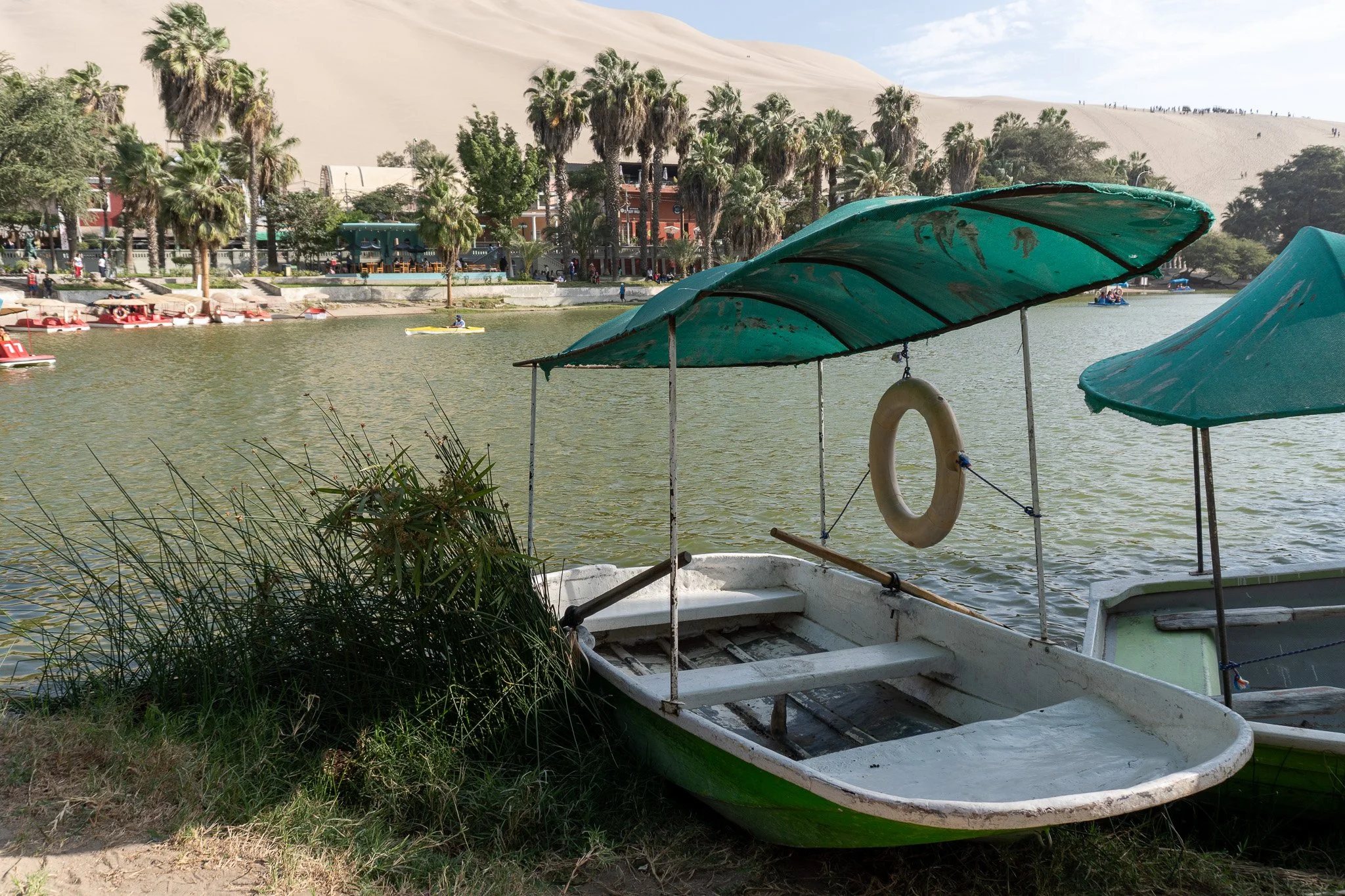
Next to Ica is the famous desert oasis village called Huacachina. If you’re looking for a quiet desert experience, you won’t find it here. But if you’re willing to book a dune buggy and sandboarding tour, it’s totally worth it! It’s so fun, and I promise you’ll understand why it’s such a touristy place. It’s an easy day trip from Ica.
Ica itself is also a really nice city, with fun museums and good coffee shops, like ‘Harvest Coffeehouse’. We stayed three nights at Ica Aventures II, which was great!
If you’re looking for another thing to do in the area, you could book a tour to Cañón de los Perdidos. It’s quite far, about two hours away, but it’s a beautiful place.

Nazca
Famous for the mysterious and ancient Nazca lines. We booked a 30-minute flight in a very small airplane to watch the lines from above. It cost about 75 dollars and was worth every penny! If you’re prone to motion sickness, definitely take some medicine, and just think: it’s only half an hour; you’ll be on the ground in no time. Read more here about my experience in Nazca.
The city of Nazca itself is surrounded by more archaeological places that might be worth a visit, like Los Paredones, Acueductos di Cantayo, or the Archaeological Site of Cahuachi.
We stayed here for two full days, not including the travel days, but since it’s all surrounded by desert, one full day would also be enough to visit some archeological sites and enjoy the plane ride.
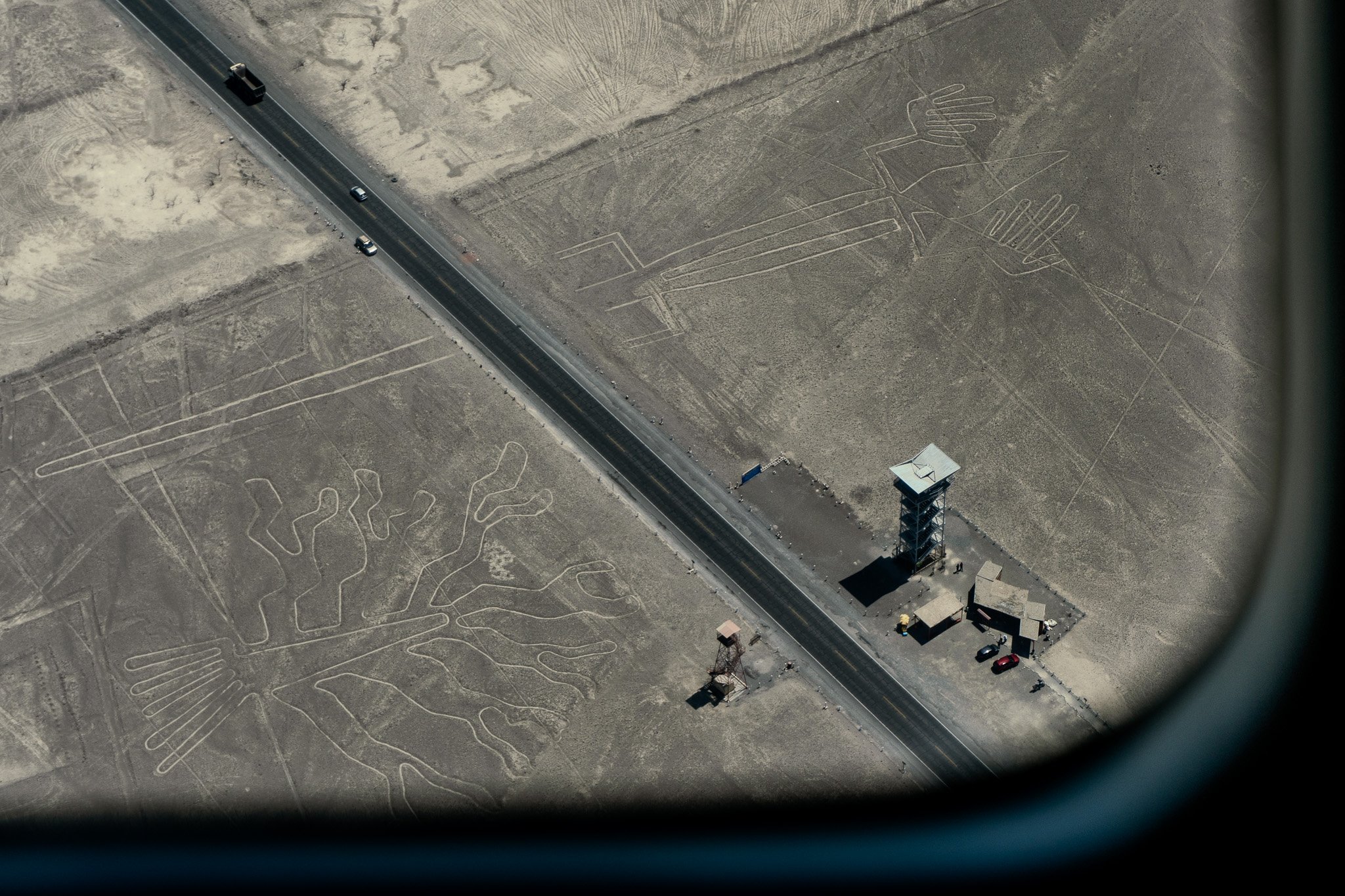
Nazca lines from plane
Good to know before going to Peru
Expected costs
My average cost per day here in Peru was 45 EUR. I think of myself as a comfort-budget traveler, which means I stayed in hostels most nights, usually in private rooms, ate out most of the time (lots of menú del día), and joined an occasional tour. But I also travelled most of Peru together with someone else, so I could share the accommodation costs, and I didn’t take any national flights.
I believe that 50 EUR a day for a comfort-budget traveller is very realistic, where you’ll save most on accommodation, so you’re also able to join the more expensive tours, like a 4-day hike. Of course, it depends on your own travel style. If you enjoy more luxury hotels and restaurants, and will take flights, you’ll end up spending more.
Best travel time
I was here most of July, August, and September, which was perfect for me. I had blue skies, barely any rain, and the temperatures were lovely. The Andes can get quite cold at night, though, so definitely bring some warmer clothes as well. Iquitos in the Amazon Rainforest, on the other hand, can get very warm during the day. But overall it was pretty consistent, and I absolutely loved it here during the summer.
Favorite poem written in Peru
Safety in Danger
This must be it
the way birds feelSensing ultimate freedom
in guidance of nature
feeling safety in dangerSwirling through the mountains
in an unmatched power
of sweet vulnerabilityWith crosses on ridges
to not forget death
we stare into the abyss
and welcome any stares back